
On the third Friday in May, we set off for Sarajevo, the capital of Bosnia. We spread the journey over 3 days with two nights in Mostar. Originally, we planned to leave Kotor on Saturday with only an evening to enjoy Mostar’s old town, but luckily for us, the weather wouldn’t cooperate and we ended up with an extra evening to explore this UNESCO marvel.
The sky in the north was overcast and dark when we were loading up the bikes so we left wearing rain gear. Taking off a day early, we were hoping to end up riding through light rain rather than downpours.
Water falling from the sky is often an all or nothing proposition back in New Mexico. Typically it’s nothing, occasionally it’s a flood. Either way, no rain gear necessary. People simply sit it out. In Europe, we’ve learned to translate millimeters per hour to time till soak-through. Encountering rain here is as certain as its duration is unknown.
At first, putting on those extra jackets and pants seemed like a decision well made. It started raining before we even reached the gas station. But that turned out to be just a brief shower and soon we were stuck in Kotor’s cruise boat traffic sweating like piglets.
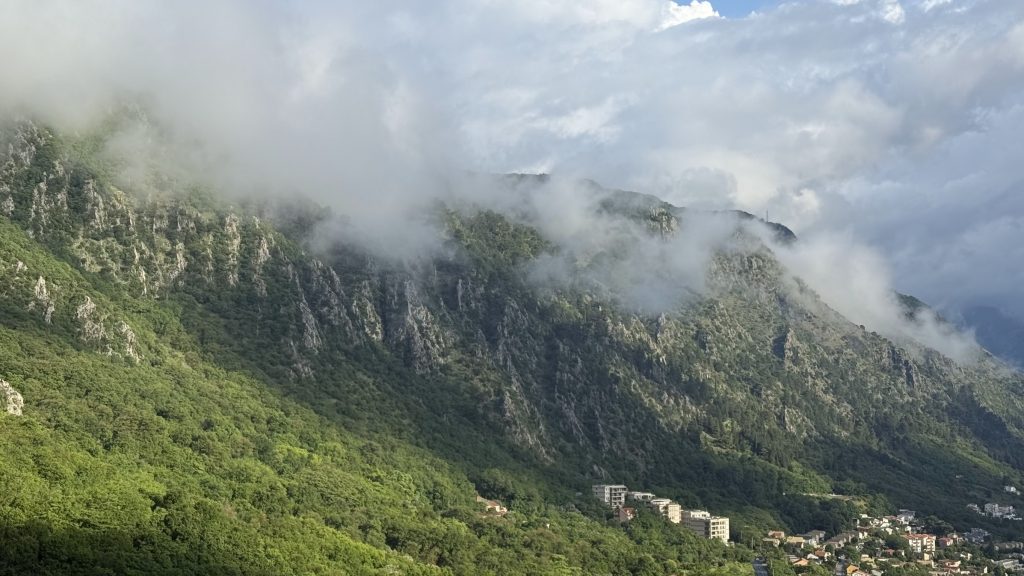
The relief came about a half hour later when we started climbing out of the Bay. This is where the clouds were darkest and for a few minutes the landscape looked like Mordor. It also started raining. Steady, then progressively worse. We were just beginning to brace for a downpour when light broke over the hills farther up north.
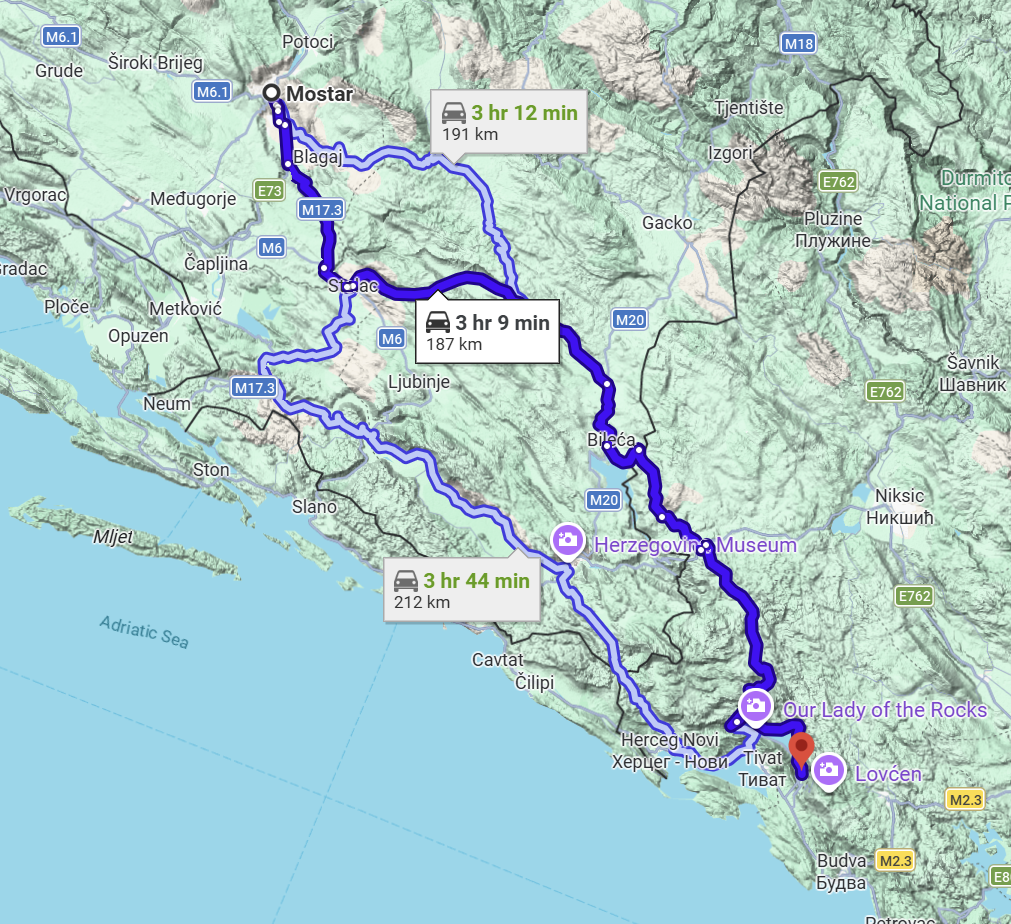
We might have avoided it, but the path we chose that Friday was dictated by expectations of precipitation. Quizzed on the subject AI thought the eastern path, leading through flatlands, would be least likely to attract rain. It was also less likely to get us in trouble navigating steep, oily inclines in a theoretical downpour.
As we made our way north, the sky cleared, we our focus shifted to the landscape and the ride became relaxed. Secondary roads through sparsely populated farmlands all the way to the Bosnian border.

A tin or copper roofed church in Montenegro, 1km south of Bosnian border
The crossing at Vracenovici was pretty modest and not particularly busy. There were separate lanes for cars and trucks, but it took us a moment to realize that the truck lanes were unattended. The truckers would pull up to the crossing, get out of their cabs and walk across and up to the car booths.
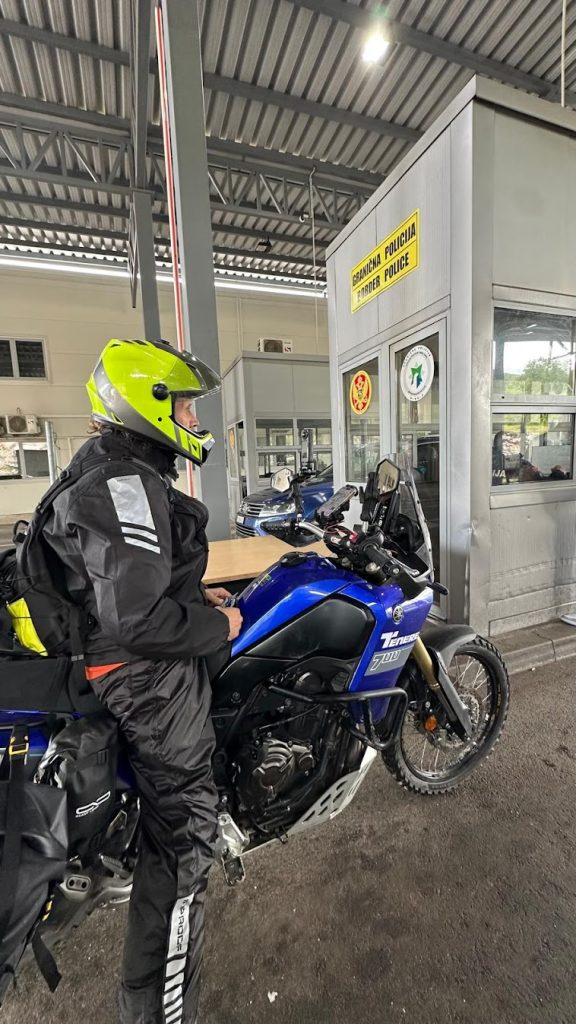
When crossing into Bosnia it’s helpful to know a little bit about the country’s recent history otherwise the experience can be rather confusing. The first flag one sees here may be either purple and yellow or red, blue and white. Coming from Montenegro, the welcome signs read: Republika Srbska.
Let’s unpack this a bit.
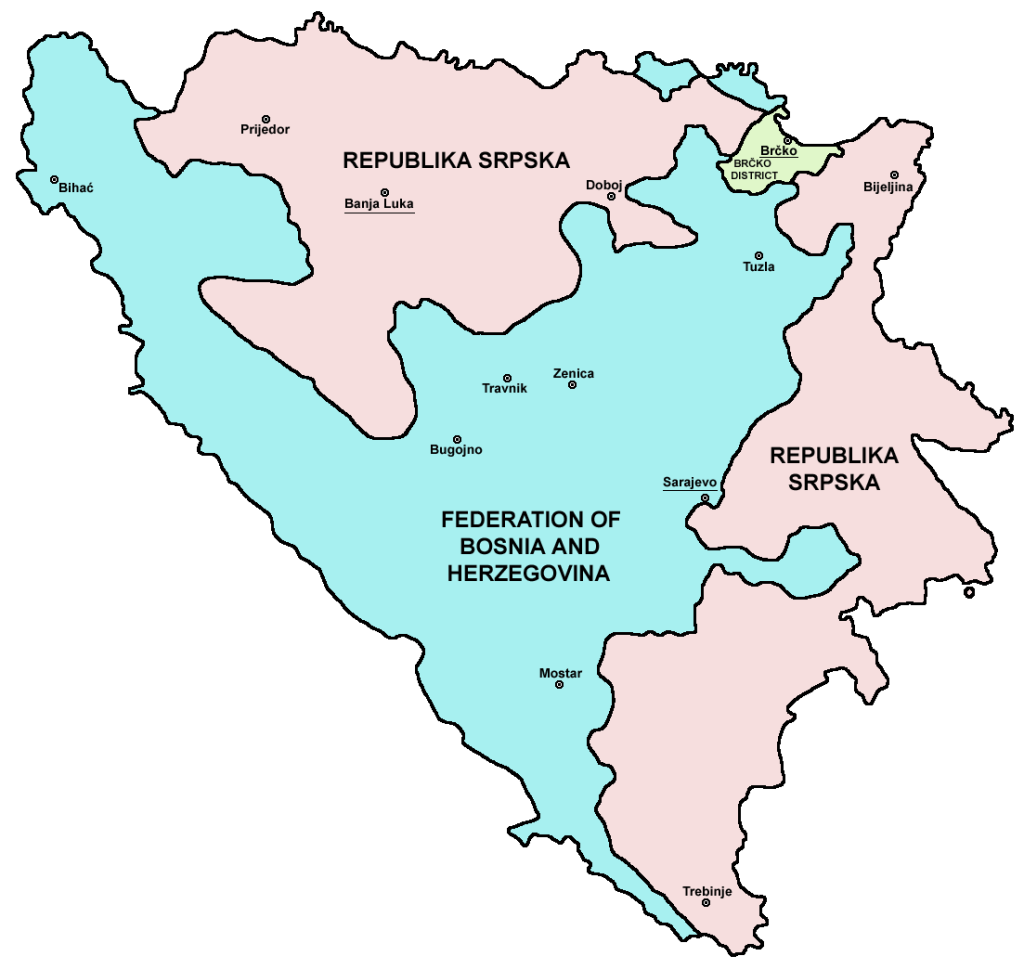
Map of Bosnia and its (3) entities.
The internal administrative map of Bosnia is, in fact, a frozen battlefield. The Federation of Bosnia and Herzegovina is separate from Republika Srpska. There’s also a tiny Brcko District. This is where things stood when all sides signed the Dayton Agreement ending almost 4 years of war back in 1995.
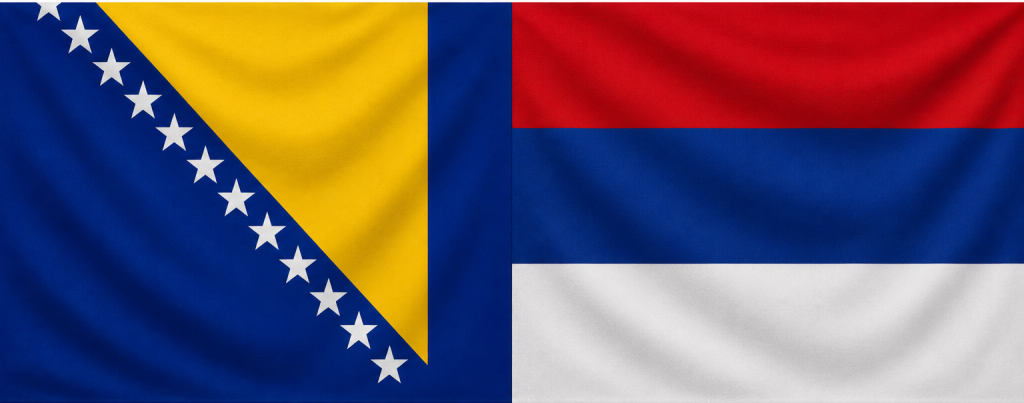
The blue and yellow flag belongs to Bosnia whereas the red, blue and white banner is a flag of Republika Srpska.
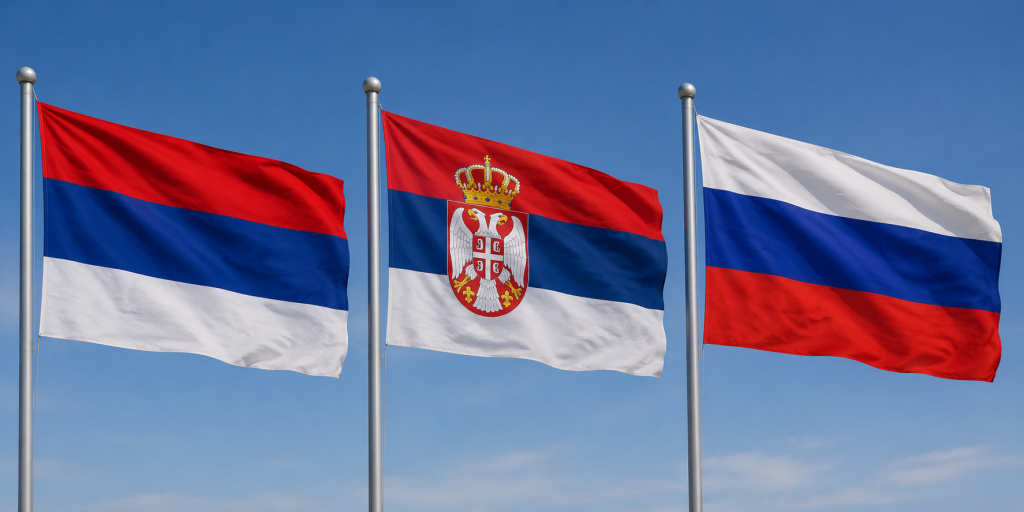
Left to right, flags of: Republika Srpska, Serbia and Russia.
Republika’s flag is the same as the Serbian flag, minus a coat of arms, which is the same as an upside down Russian Flag. In fact, 6 out of 12 Slavic countries use this color scheme in some fashion.
Riding through Bosnia after crossing the border the political and religious patchwork is hard to ignore. Passing through three villages along the same road one often sees a different flag flown over each. The adjacent cemeteries will also have one of three dominating grave markers. Either a white obelisks or an orthodox or catholic cross.
We arrived in Mostar around 3pm, just before a minor spring shower. Finding the hotel turned into a bit of a blind man’s treasure hunt. The EU sim in my phone was out of data and I could not log into my email to figure where we were staying over the next two nights, much less navigate to our destination. About all I did have was a rough idea of where the hotel should be. Plan A, a bit of a stretch, was to just look for hotel signs and hope something would ring a bell. Plan B, find WIFI to access email.
This took much less time than expected. No sooner did we get going then I spotted on a hotel sign with what seemed like a familiar name. Three or four arrows later we arrived at the hotel itself. Just to make sure, I went down and asked the owner if… she had a reservation in our name. Yes, I know, typically, this works the other way around. They ask you if you have a reservation. The owner took it in stride and even smiled. Of course, she said.
Głupi ma szczęście, as we sometimes say in Polish. Fool’s luck.
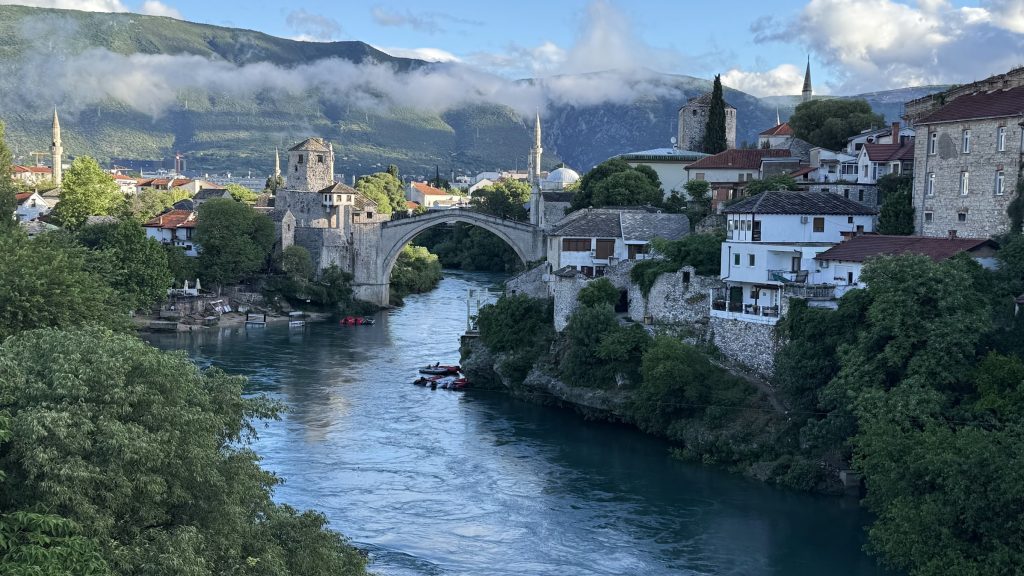
Stari Most in Mostar
Our lucky streak continued. The hotel ended up being only some 75m from Stari Most, the famous 400 year old arched stone bridge spanning the two sides of the Neretva River.
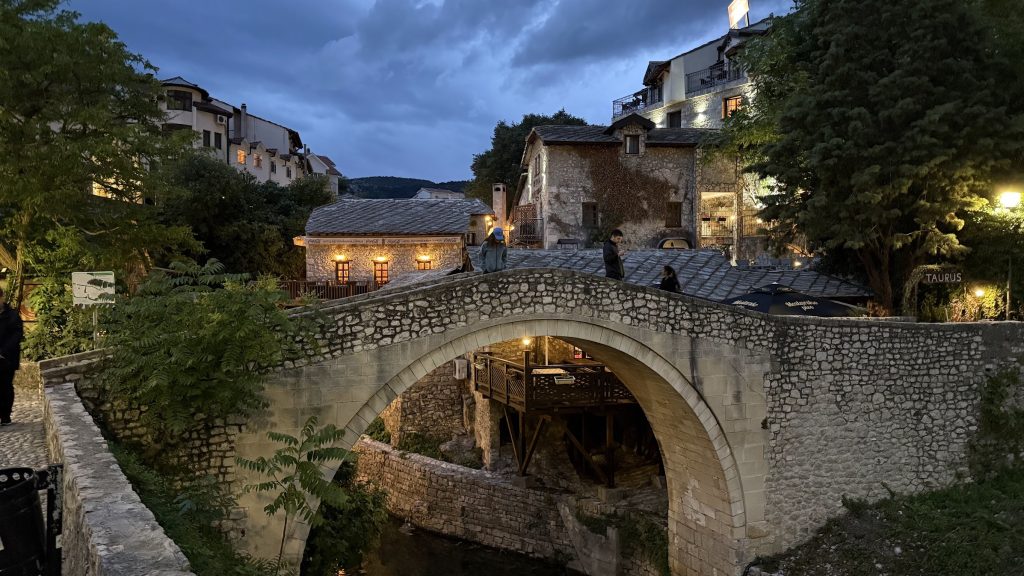
Min on Kriva Ćuprija, the Crooked Bridge. Juliet’s balcony doesn’t stand a chance.
Only a few minutes later, Mostar had us completely under its spell. Cozy, romantic and exotic all at the same time.
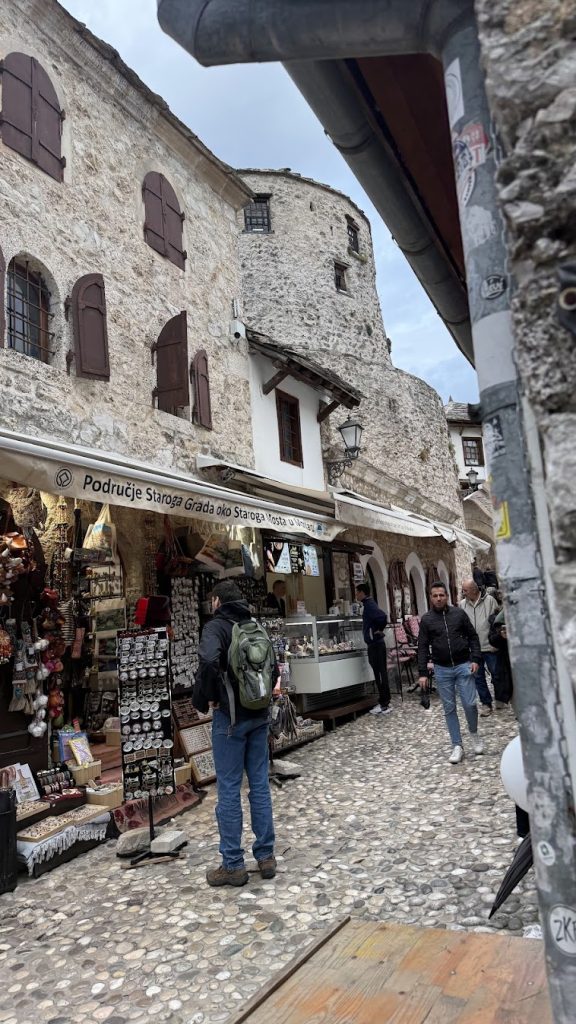
The following day we explored the narrow cobblestone streets and bazar stalls between rain showers.
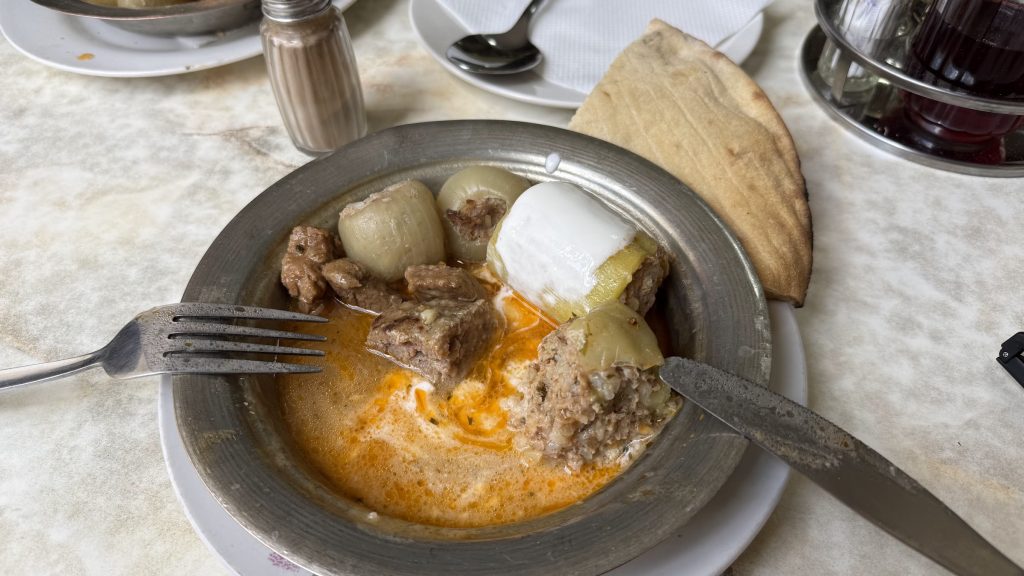
And went on a couple surprisingly successful culinary adventures.
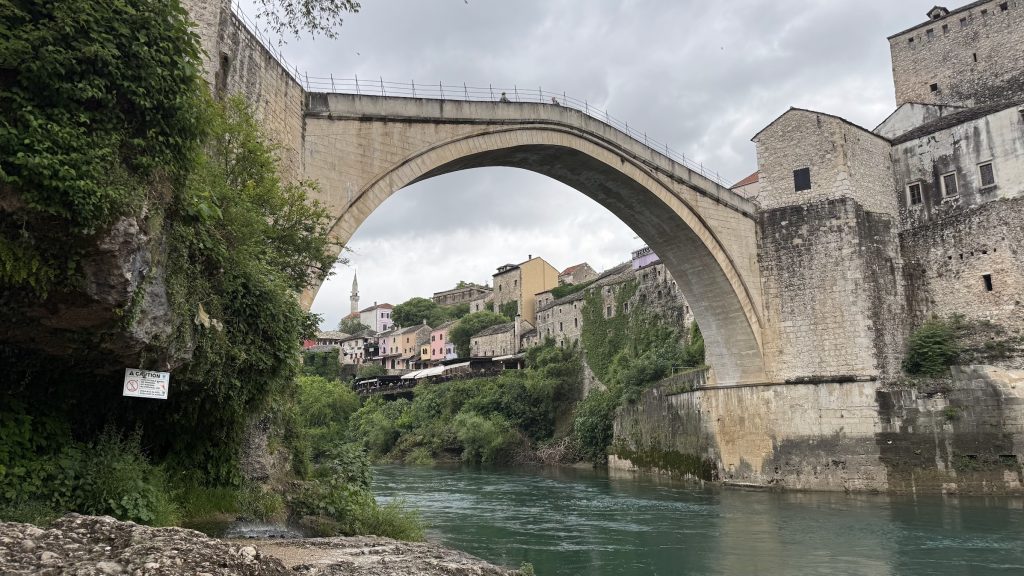
Stari Most from below.

The route from Mostar to Sarajevo was considerably more interesting than what we saw on Friday. Pretty much all river valleys and gentle mountains bursting with spring green.
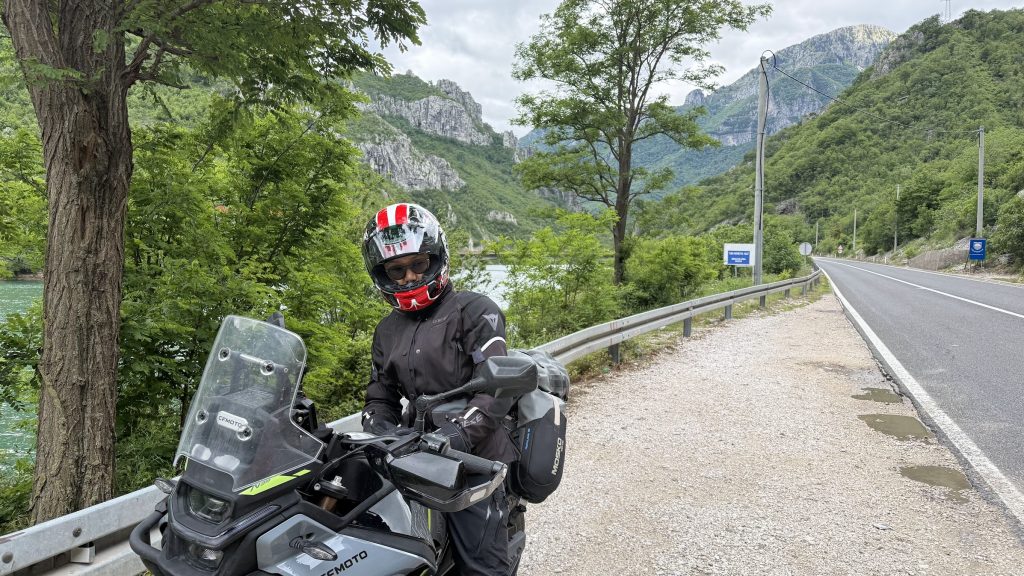
We didn’t have far to ride that day so we dragged our feet along the way pausing at bridges and overlooks. We even took a mini-side ride to visit a mountain village along a road leading in the opposite direction.
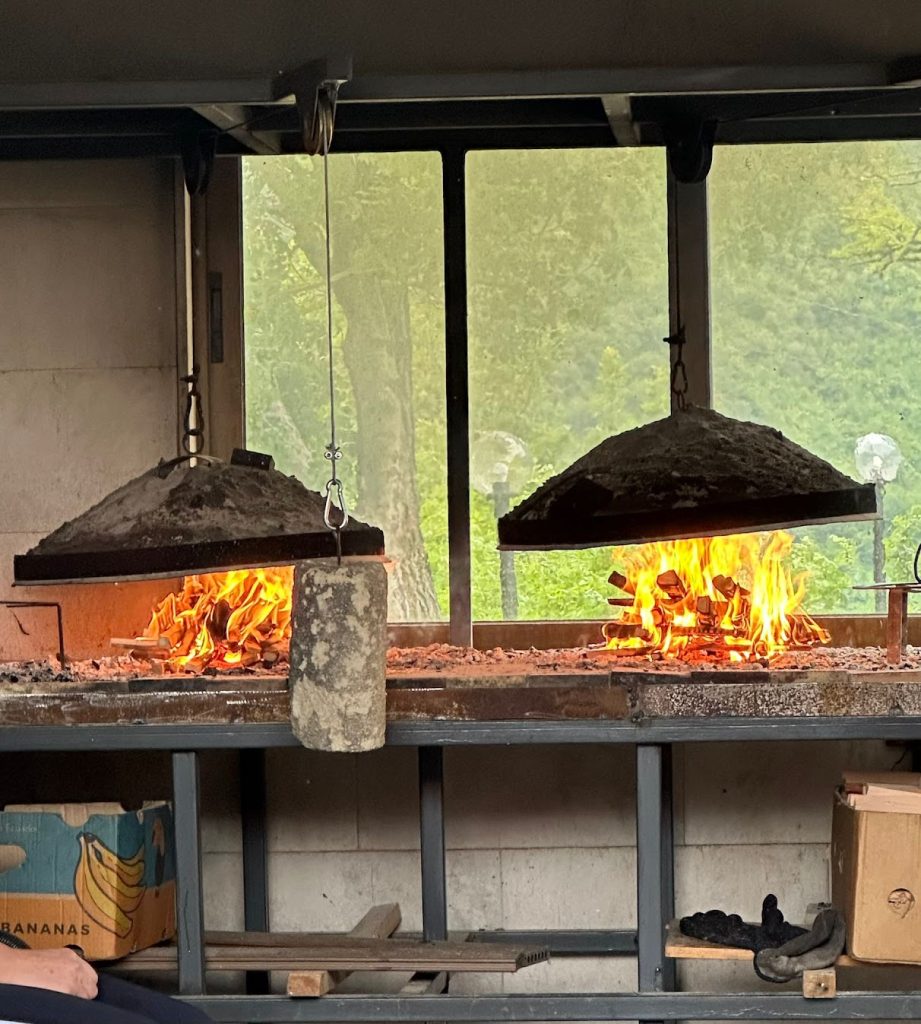
Our best find of the day turned out to be Burek King, a fast food Balkan take on the traditional Ottoman concentric filo wraps baked over fire. We found it on the side of the road in the middle of nowhere and the only thing fast food about it was the speed of delivery. Their burek was still prepared in a black iron tray hung over wood fire logs covered with a sač or a dome. The way it must have been over hundreds of years.

Min was enthralled. My own stomach was at peace for the rest of the day.
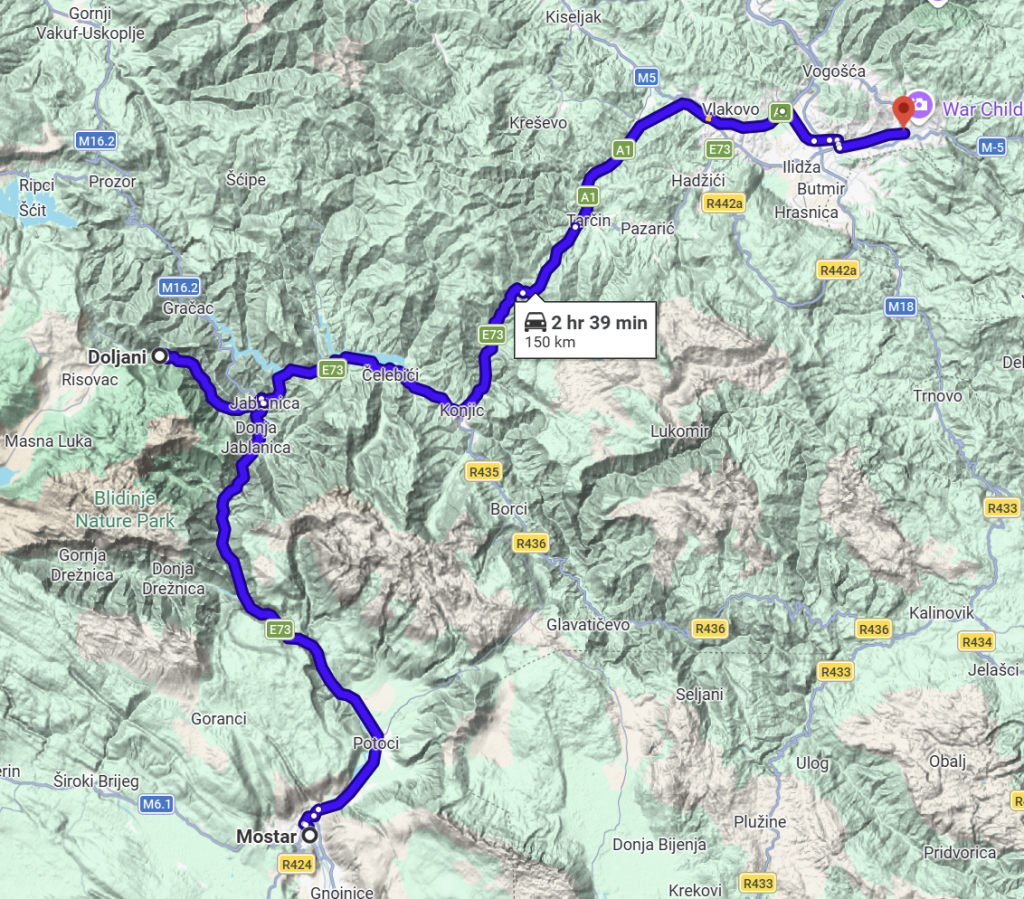
Our chosen route for the day was simply the most straightforward path between Mostar and Sarajevo. Doljanka River hurling mountain snow melt down a valley was our only detour.
Arguably, the prettiest part were the canyons leading up to Jablonica.
Despite all the foot dragging, we got to Sarajevo well before check-in time for our Airbnb. This turned out to be a stroke of luck as I developed an ocular migraine shortly after we arrived. In my case this usually translates to at least a half hour when I shouldn’t be walking around, much less riding a motorcycle.
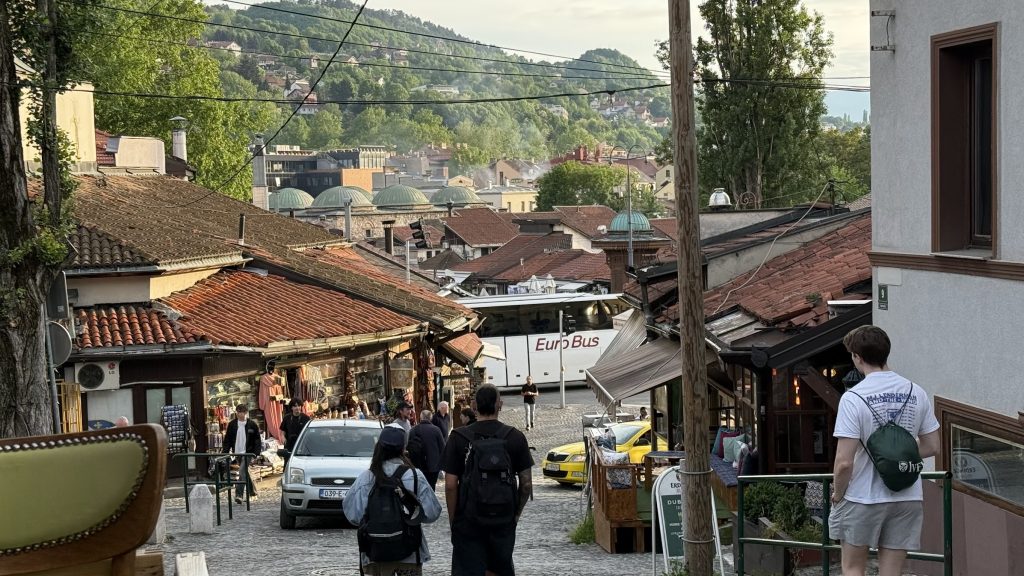
This particular spell caught me right at the edge of Baščaršija, the old Ottoman town market. We parked the bikes on the sidewalk by a bakery right next to the tram tracks and Min pulled out the meds. Eventually, the Ibuprofen melted the dancing blind spots away and we were on our way again.

Sarajevo, as we’d discover over the following days, is quite a stew. Intensely multi-cultural with a mix of Ottoman, Austro-Hungarian and Slavic influences, the city truly is the beating heart of the Balkans. Makes one wonder what it was like back in the 80’s at the height of its glory when it hosted the winter Olympics. In the aftermath of the wars that shook the region in the 90’s it lost some 40% of its population. The town has recovered half of its losses since, but the lingering trauma is still perceptible to visiting tourists like ourselves. Some of it hangs invisible in the air, some sits in the unrestored facades of the remaining bullet ridden buildings.
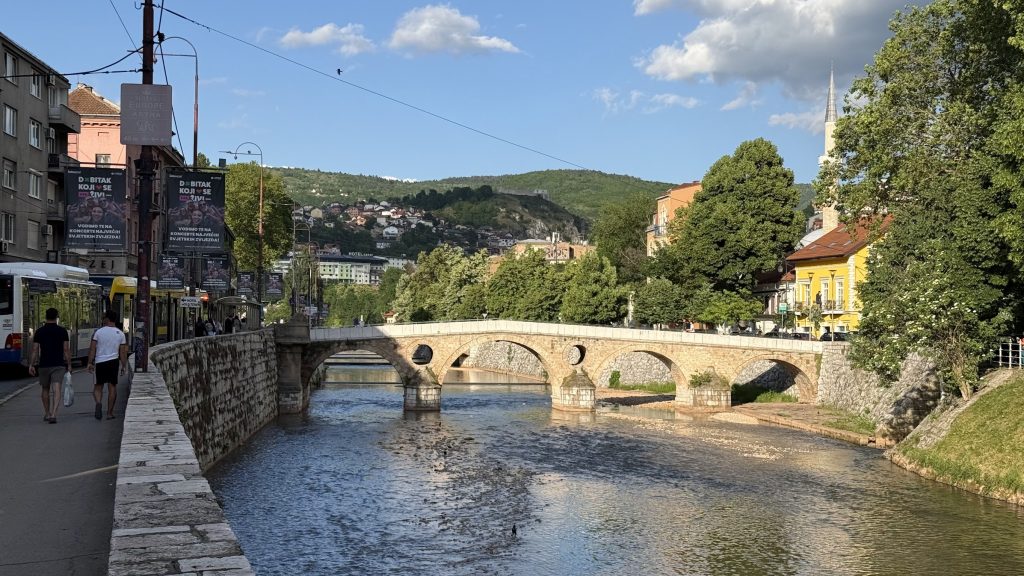
Sarajevo, Latin Bridge. Archduke Franz Ferdinand was assassinated on the left end (north side) of the bridge.
What was lost does not detract from Sarajevo’s beautiful setting — a snug valley of gently sloping mountains with red roofed single family homes scaling the surrounding hills. Nor from the many signs of a recovering city one sees on its streets. That said, this largest city in Bosnia does come across as a bit more shy than the Tirana we saw less than a month earlier. The Albanian capital, too, had a difficult past, but whereas there everything seems to be screaming watch this! here it’s more of a cautious so far so good.
REVISION:
Witnessed Sarajevo on a Saturday night yesterday. Streets packed, bars spilling onto sidewalks. As alive as Tirana’s Blloku.
All of the above are non-rider’s impressions of Sarajevo. For motorcycle riders and ADV riders in particular, this mountain town is a formidable pitstop.
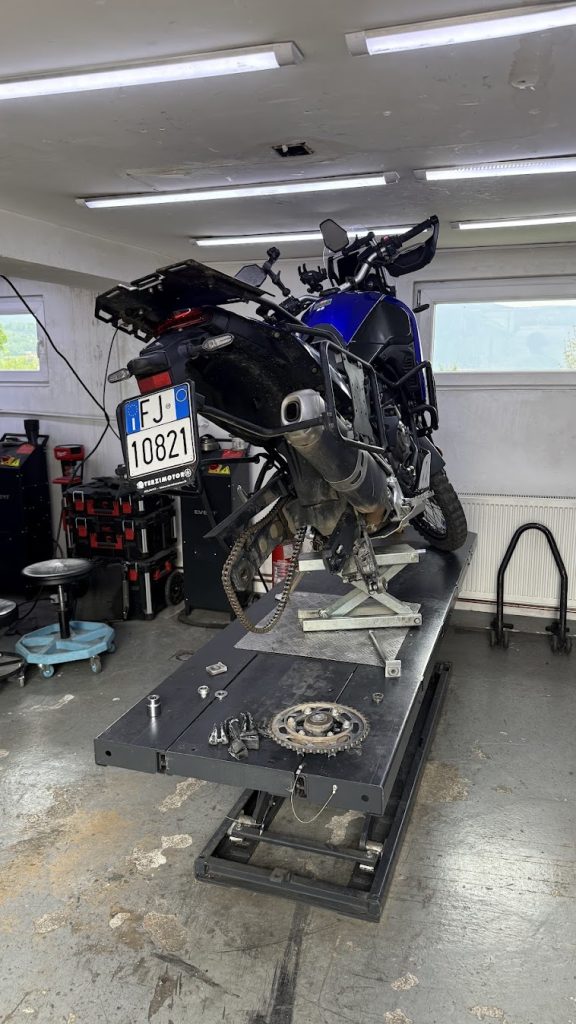
My T7 getting a brand new Karoo boot @ Mima’s.
Depending on one’s location in the city, accessing the TET can take as little as 5 minutes and a mechanic willing to help out riders in need, regardless the brand of the machine, can be as little as a block or two away.
A shout out to Moto Servis Mima where I watched groups of long distance riders from all over Europe stream in and out as Mima himself attended to punctured tires and seized brakes while a GS riding friend of his borrowed a stall to replace his own failing shaft.
English, German and every flavor of Slavic were spoken when I was there. A veritable ADV brotherhood.
As always, I will follow up with ride reports.
Leave a Reply