
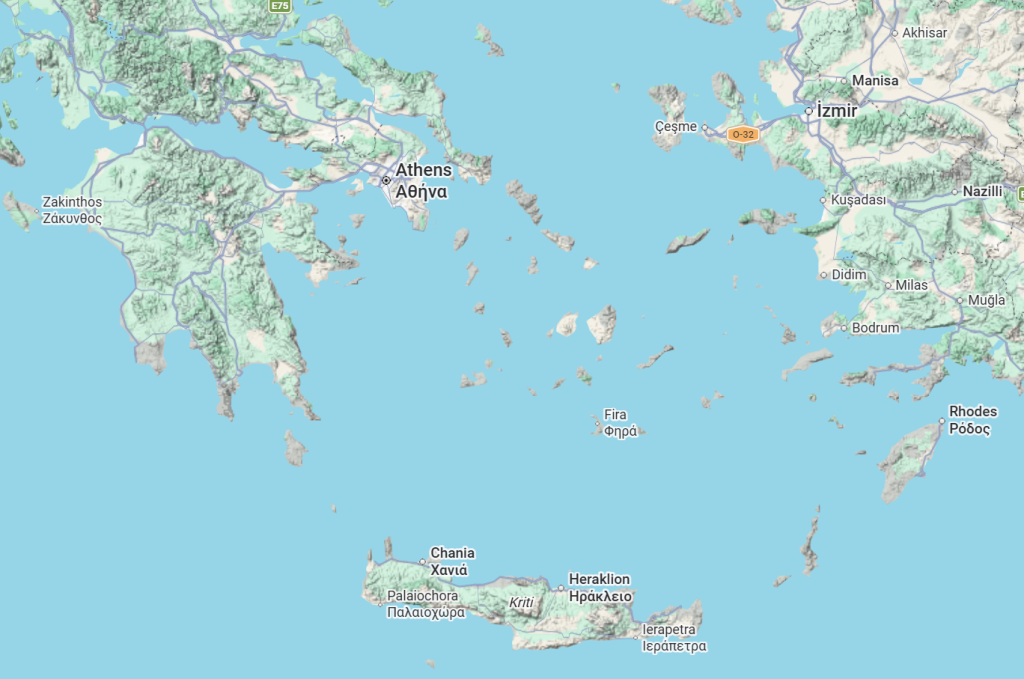
Greece wouldn’t be Greece without its islands. People of this region have been island hopping for millennia. Islands were where natural resources were harvested and mined, crafts perfected. This is also where many aspects of their culture first came into being.
To get a glimpse of life on the Hellenic isles we visited just two — Aegina and Hydra.
That’s two out of six… thousand.
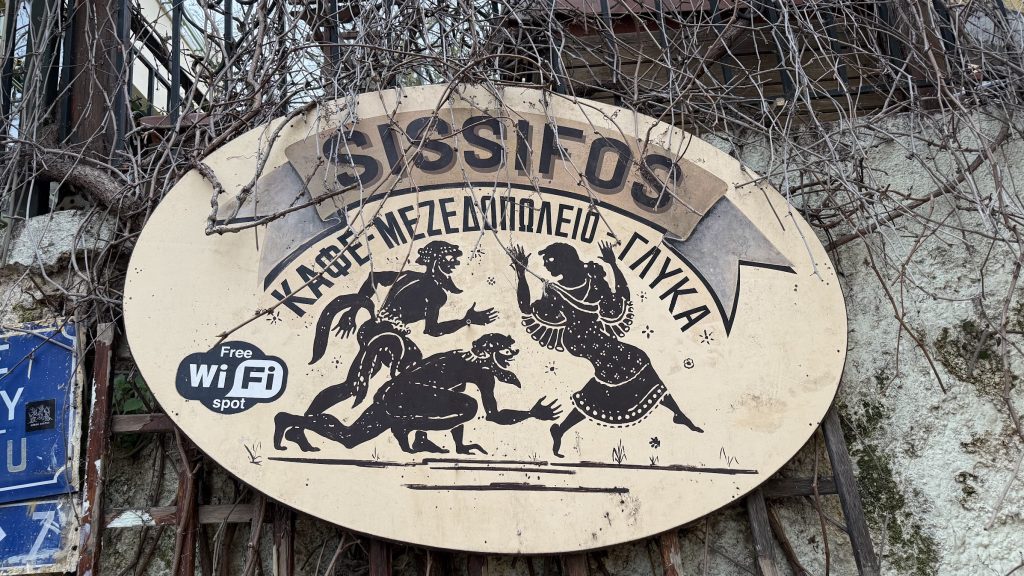
A little comic relief before we continue.
Our first introduction to Greek islands came aboard the ferry from Bari to Patras where we saw the Ionic islands just south of Albania. Aegina, too, takes its name from the sea surrounding it, the Aegean. The island is one of the 20 largest and is easily accessible via a 45 to 75 minute boat ride southeast from Athens.
The shorter of the two rides requires a ticket for a high-speed hydrofoil. This is the option we chose with Erica and Miguel after taking an early morning metro to Piraeus.

The port town is a separate entity from Athens, but only administratively. Impossible to tell where one starts and the other begins.
The Piraeus passenger terminals make quite an impression. Up until now the largest passenger ferry port we’ve seen was Genova in Italy where 6 separate ferries were scheduled to depart on the same evening. Piraeus is an order of magnitude busier.

There are 40-80 ferries leaving daily. Think Penn Station in NYC, but open air, on the water, cleaner and better organized.
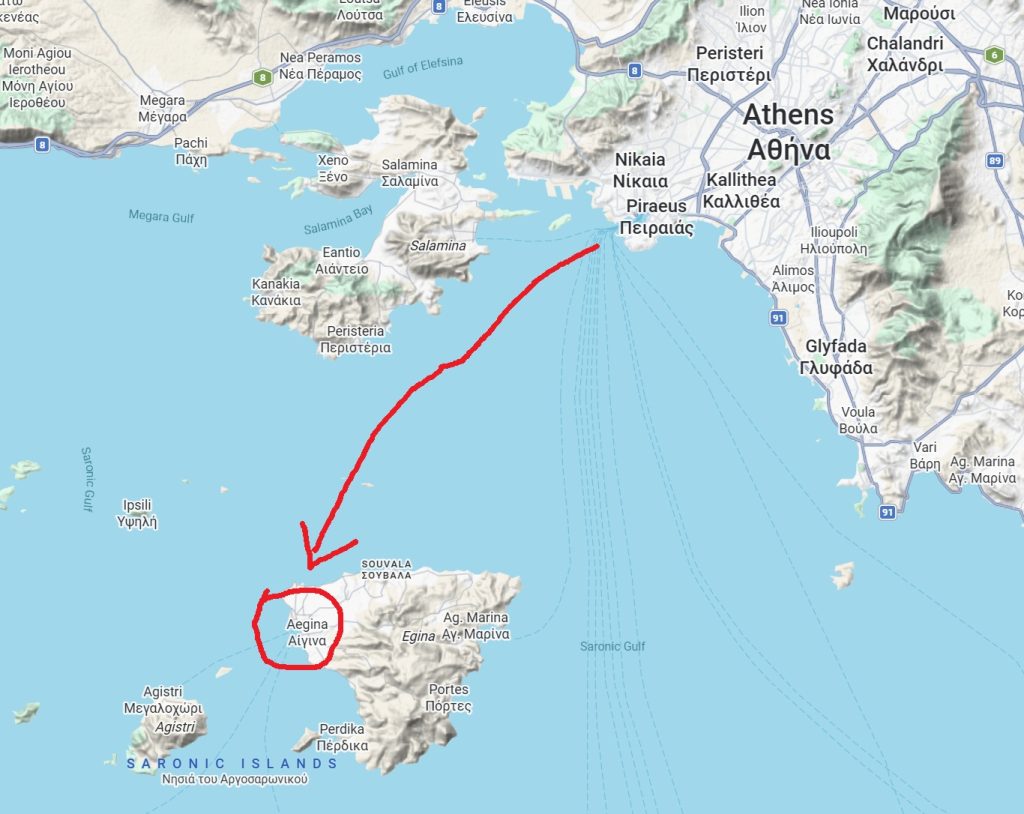
The island has several ports. We sailed into Aegina, the largest, on the western coast.
Aegina, Port. 360 video.
Although thoroughly enjoyable as an outing, our make-it-up-as-we-go approach to discovering the island didn’t get us particularly far.
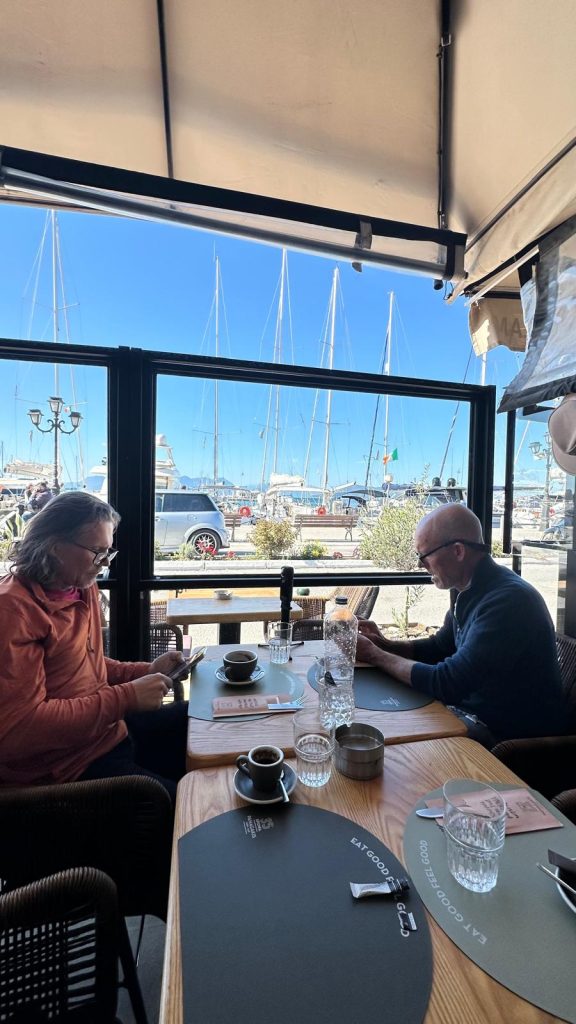
We walked through the port streets, struck up a conversation with a retired British couple living on the island and set down to a late breakfast.
Across the street we could watch small yachts and fishing boats bringing in the morning catch.
Afterwards we continued exploring on foot as far as the fenced off ruins of the Temple of Apollo and a nearby beach.
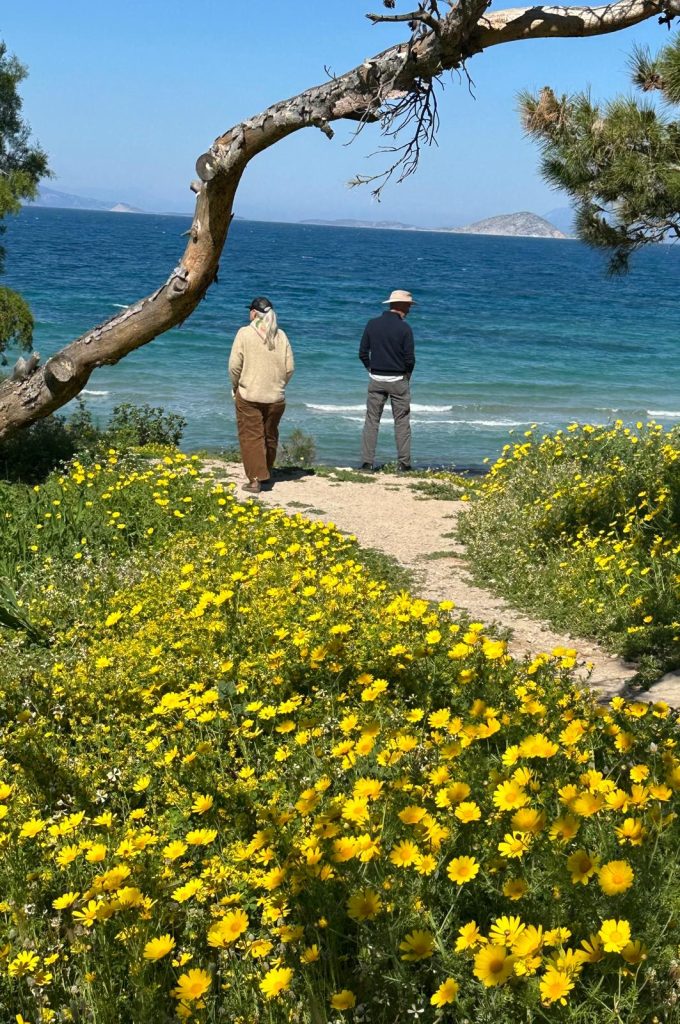
More time and some form of locomotion would have helped us accomplish more, but maybe we’d have missed the point. This is where the Athenians go when they want to spend a morning or an afternoon sitting in a cafe by the water.

On the way back Miguel managed to startle one of the boat attendants out of her daily routine when he pretended to willfully ignore her order not to board an earlier boat with the same destination. She laughed when she saw him again when she and the boat returned for our scheduled run half an hour later. Those little moments.

Image from article in Irish Times
Why Hydra? Partially because Min and I are big fans of the late Leonard Cohen. The poet-singer-songwriter spent almost a decade living on the island in the 60s and 70s transitioning from a struggling writer to the world famous songwriter he was to become.
Hydra was very different then. It was home to a tightly knit bohemian community of artists living where they could afford to create. Not unlike Santa Fe before our time based on what we’ve heard from the old timers. I asked AI the other day if there are any places like that in the world today. Slim pickings. But Sarajevo made the list. We’ll be there in mid May.
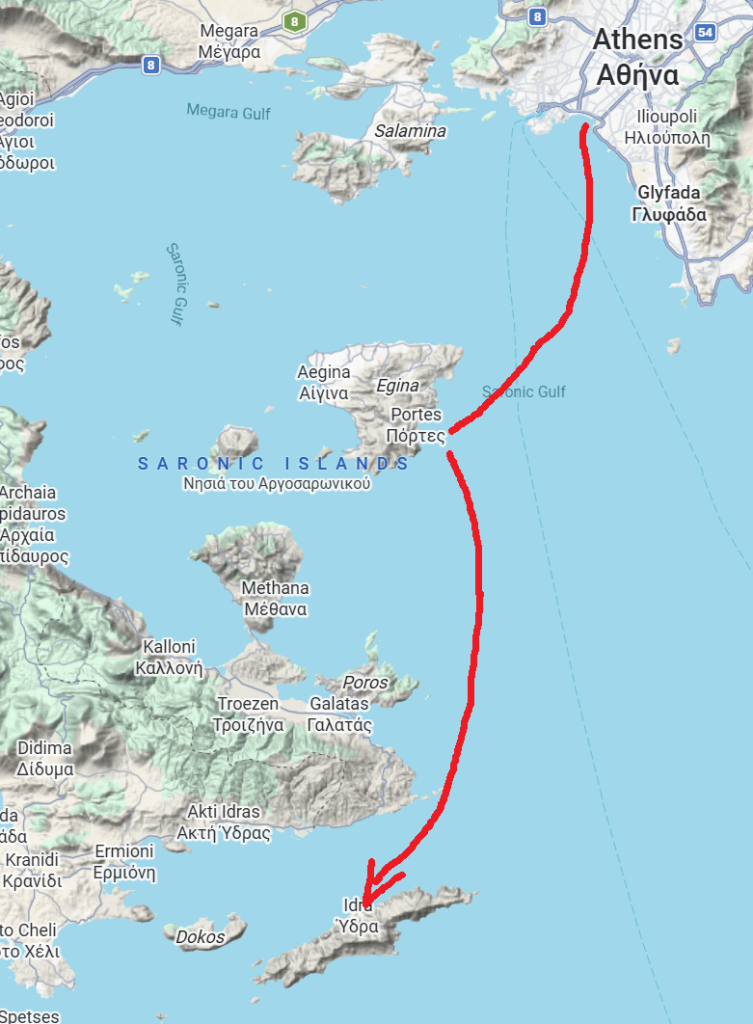
Back to Hydra —
This was a longer sailing than the week before, about 90 minutes in all. Midway to our destination, the boat pulled into Portes, a small harbor on the southeast side of Aegina. Unexpected but welcome as it gave us a glimpse of the higher, more remote shoreline we didn’t see on our first outing.
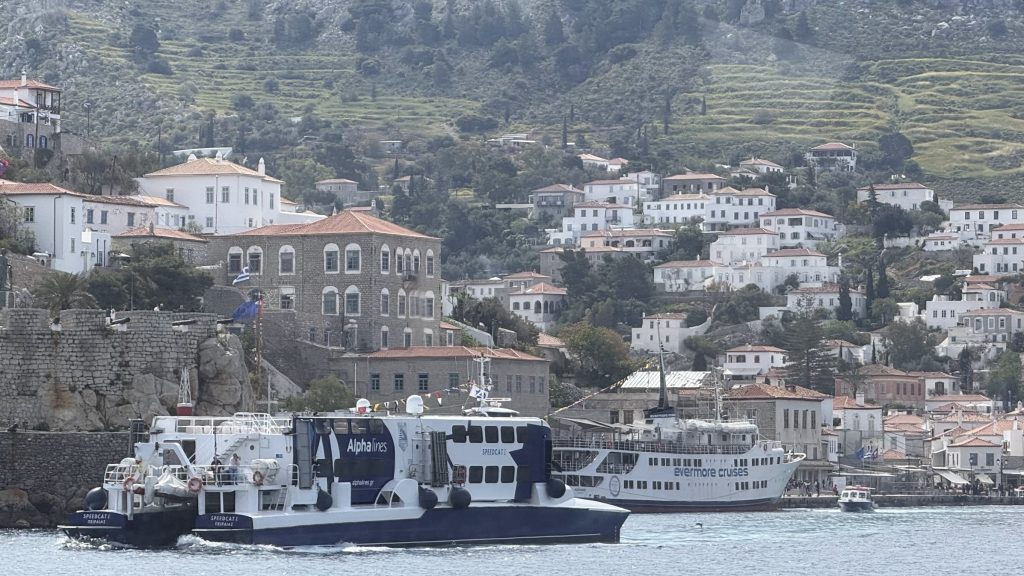
We reached Hydra about half an hour later, around 11 am.
Although far from Athens, Hydra lies relatively close to the mainland which is clearly visible from most points on the island. The port itself struck me as more authentic but also more posh than Aegina’s.
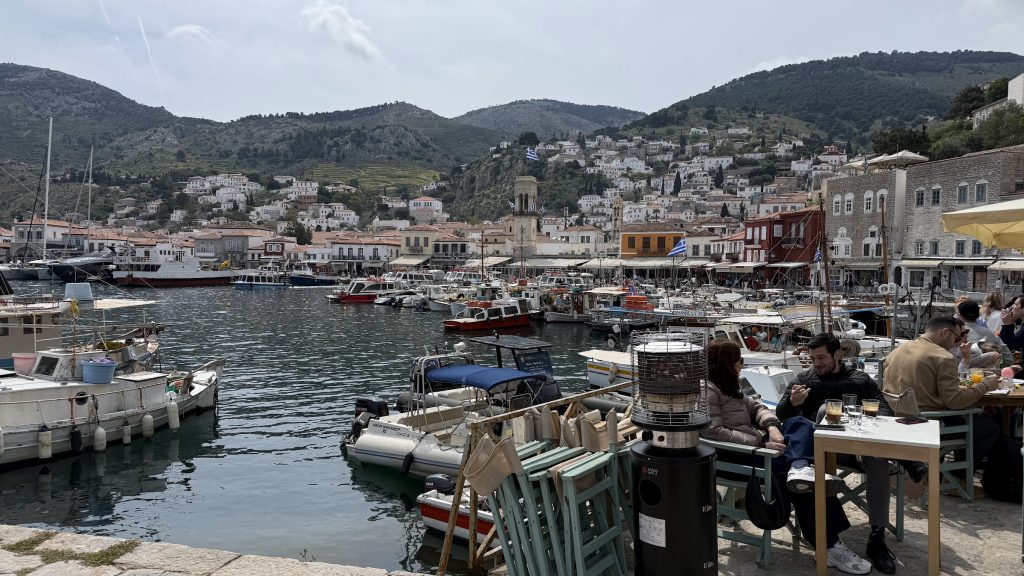
My ear picked up as much Greek as French, Dutch and British accented English in the cafes. A few of the yachts bobbing in the water were worth as much as two median family homes in the US. So much for the days when Cohen could buy a $1500 home here in the 60s.
But as much as the tourists must have changed the character of the island, some things are probably just the same as in the bard’s time. For one there are no cars anywhere. Not even motorcycles. The handful of trucks that we finally found parked on the shores toward the end of the afternoon were all utility vehicles.
The air is clean, the architecture as it must have been for centuries. Passage of time is measured in boat designs and outdated party music blasting out of one or two establishments on the west end of the harbor.
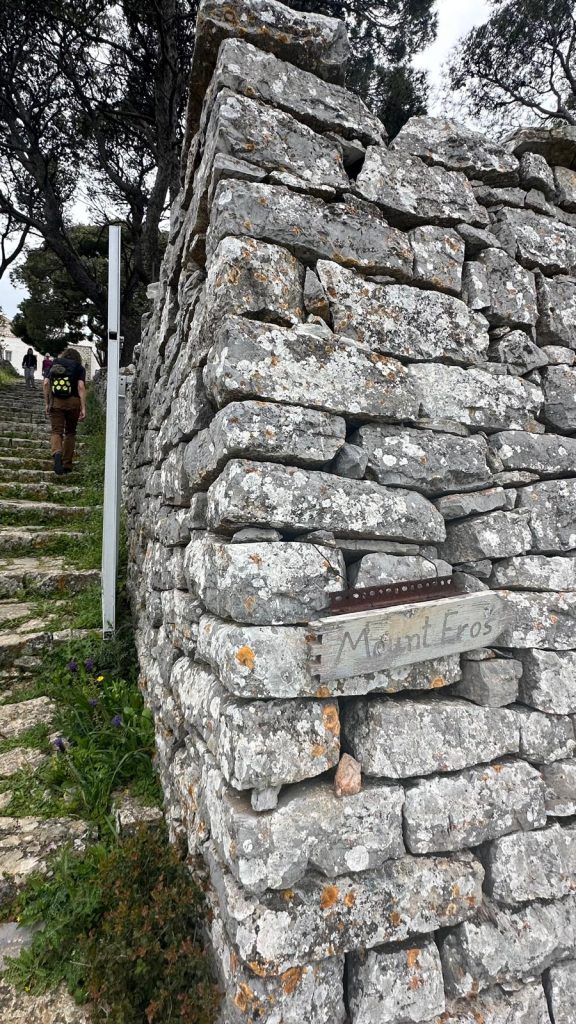
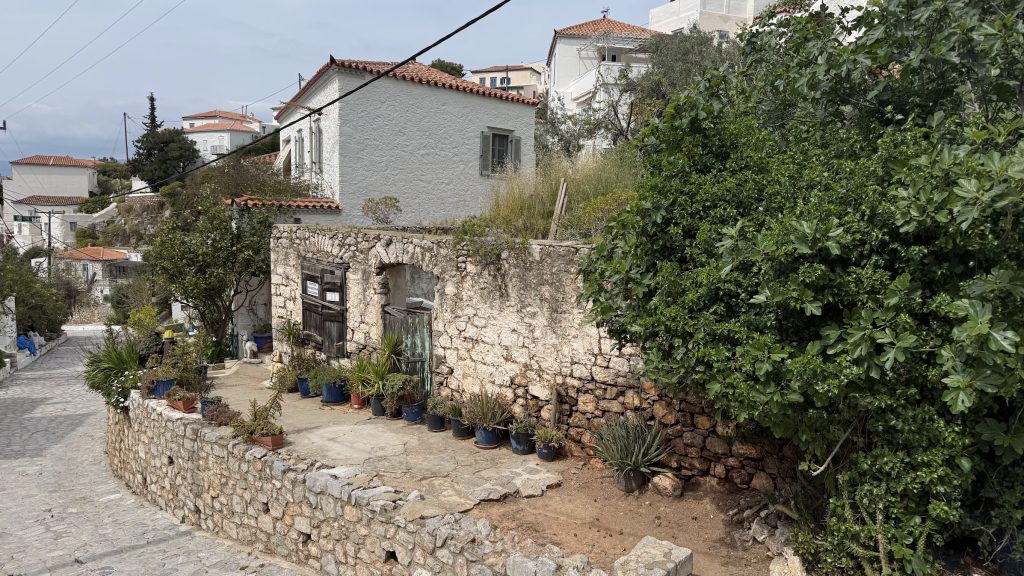
A typical steep, narrow alley.
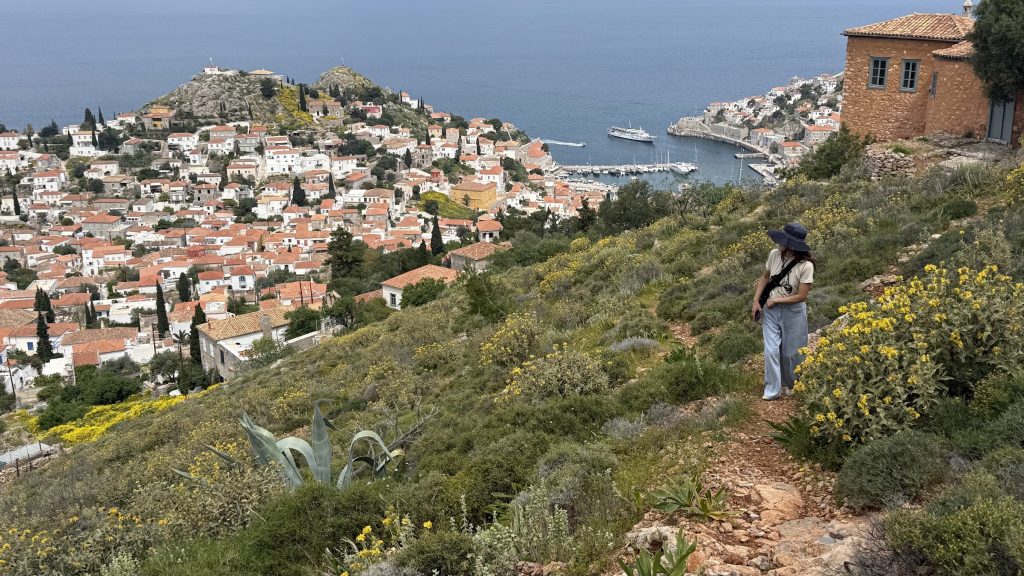
Unlike on Aegina, Min came with an agenda this time. We were to visit the monastery about an hour’s walk above the port. This we accomplished with pleasure and a fair amount of sweat.
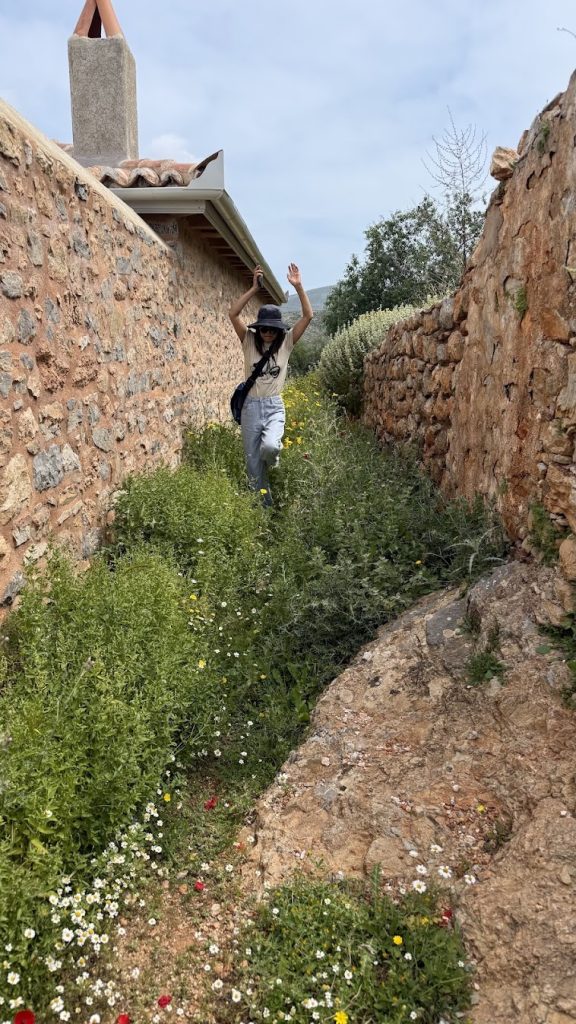
Some plants bite.
The climb is steep and long and there’s no clear beginning. I had to use Gaia, the outdoorsy mapping app on my phone, to find it.
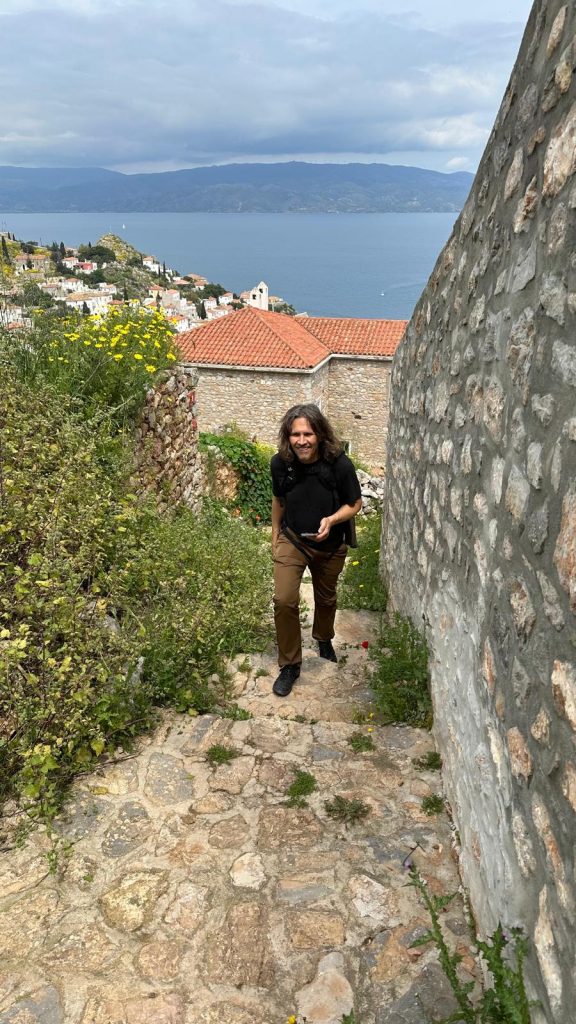
This was my favorite part of the day. The path took us through many tiny streets of the town, all built only with walking in mind. Pretty much a labyrinth, but a very pretty, enjoyable one.
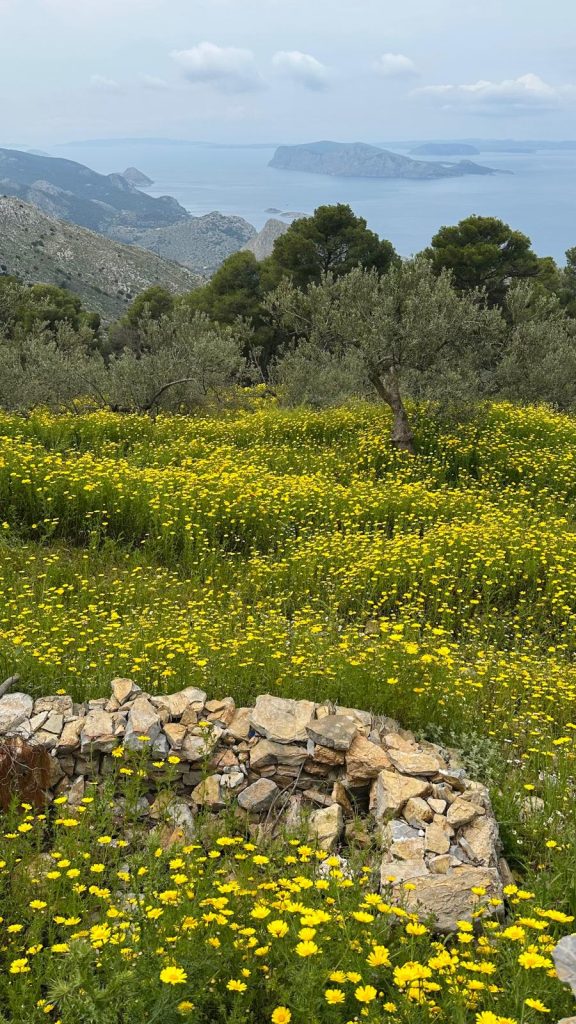
Westerly view from the summit.
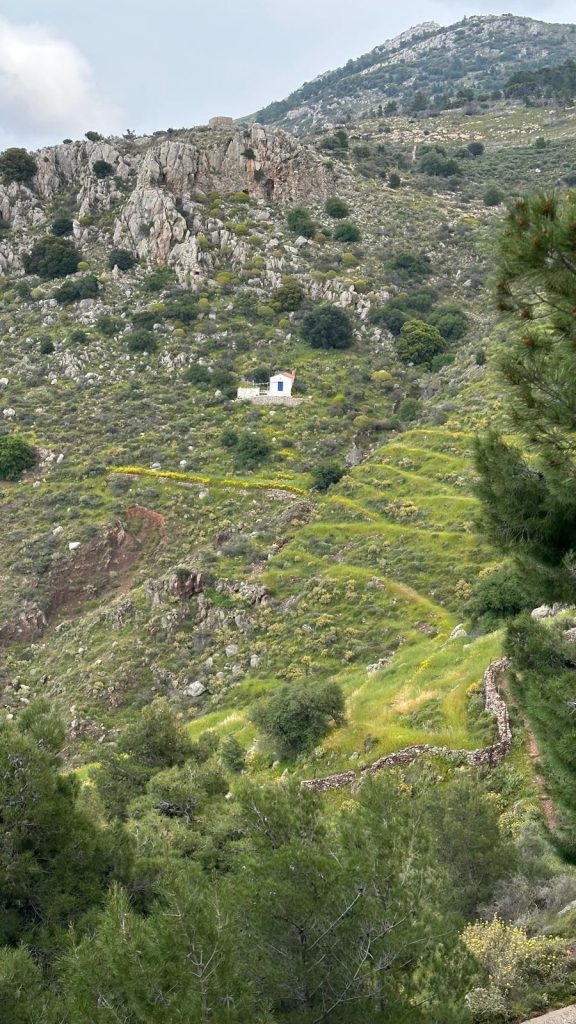
The monastery served its purpose as a hiking destination well. The location is remote, the views of the island and its surrounding are splendid.
Walking down from the monastery.

Back in the port we found a great place to eat, another walking path along the shore and…
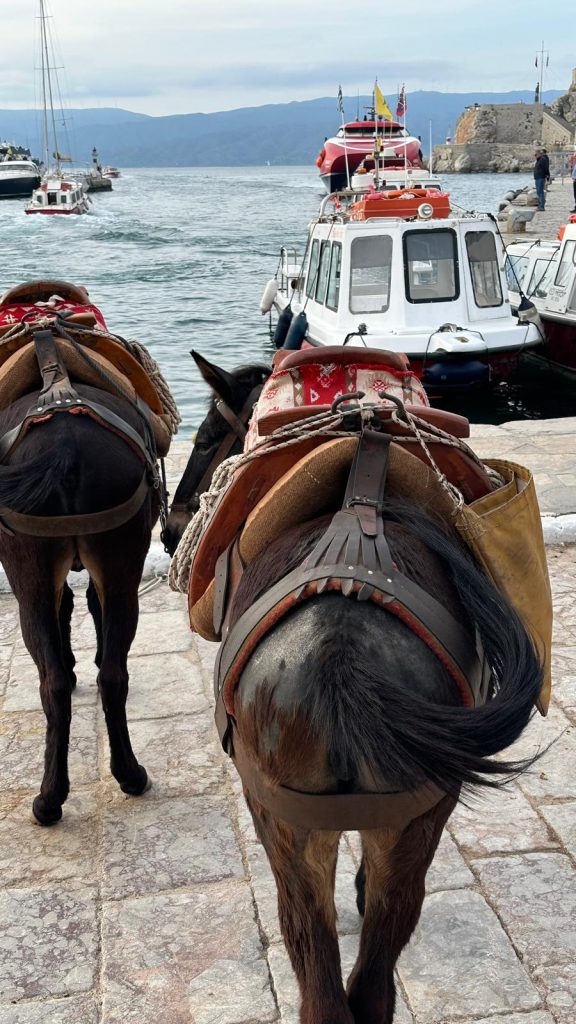
…beasts of burden, of course.
A few more 360 videos below.
Walking down from the monastery.
Entering town from above.
Leave a Reply