
We decided to make our crossing from Bologna to Rome, our next base, a weekend adventure. Rather than a 400km dash, we’d take two days to meander around.

Via San Felice, 8:45am on a Saturday morning, almost ready to go.
The first section, taking us from Emilia-Romagna into the heart of Tuscany, was a rather quick one. Since we already spent a good chunk of time over the previous 5 weeks exploring the terrain between Bologna and Florence via secondary roads we decided to cut to the chase and skip over Dante’s hometown altogether this time around. Doing so would leave us with a lot more time to explore the backroads southeast of Florence all the way to Cortona.
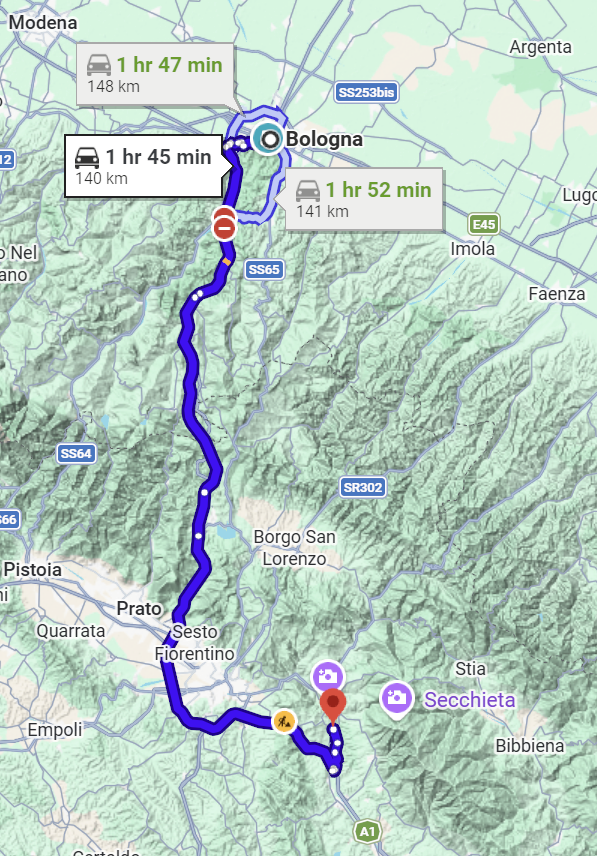
The plan worked well, but our choice of the initial autostrada A1 wasn’t optimal. Setting out that morning the weather was just about ideal, but I failed to study the map in detail and missed a scenic opportunity. It turns out that A1 splits into two routes about 40km south of Bologna — a Dritta and a Panoromica. The first takes the shortest route to Florence following the river valley and runs through multiple, long tunnels. This is the one you want in rain and snow. The Panoramica, as the name suggests, is the pretty one. Studying the route at 130km/h wasn’t really an option 2km before the split so we decided to follow the Dritta. This just in case it ended up being considerably longer. Having looked at the map since, I now see that they’re nearly identical. Next time.
Once past Florence, we continued on to the village of San Clemente which we reached about 40 minutes later. Our actual destination were the backroads running at the foothills of the Apennines starting with the SP88. San Clemente was simply a convenient first cornettos and cappuccino stop.
The Tuscan country side en route was quite pleasant, even as seen from the A1 leading east of Florence. Lots of villas and mansions surrounded by tall cypress trees and well-kept gardens sprinkled along the rolling hills.
The village of San Clemente itself isn’t much to write home about, but the cornettos did hit the spot. More importantly, our bet on the backroads began paying off beautifully shortly thereafter as we started climbing the hills through small villages and into a dense evergreen forest.

The riding here is superb, nothing but peace, sights and endless curves.
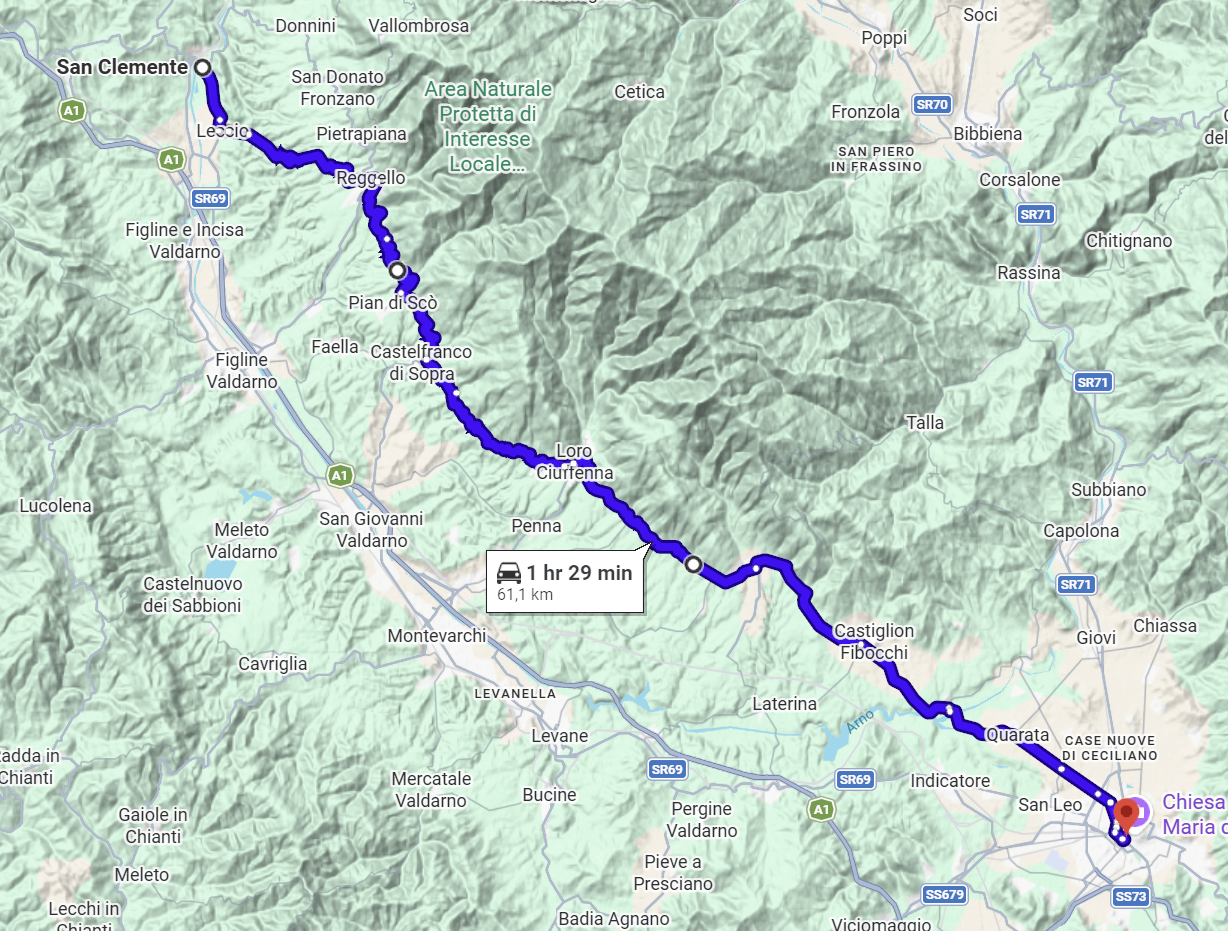
When I first studied the map I thought we might want to pick up the SP1 around Loro Ciuffenna, but something told me we’d be missing out by skipping Reggello. Sure enough, AI confirmed that road to be particularly pretty. It was spot on.
The stretch between Reggello and Loro was the nicest 45 minutes we would ride over the entire weekend.
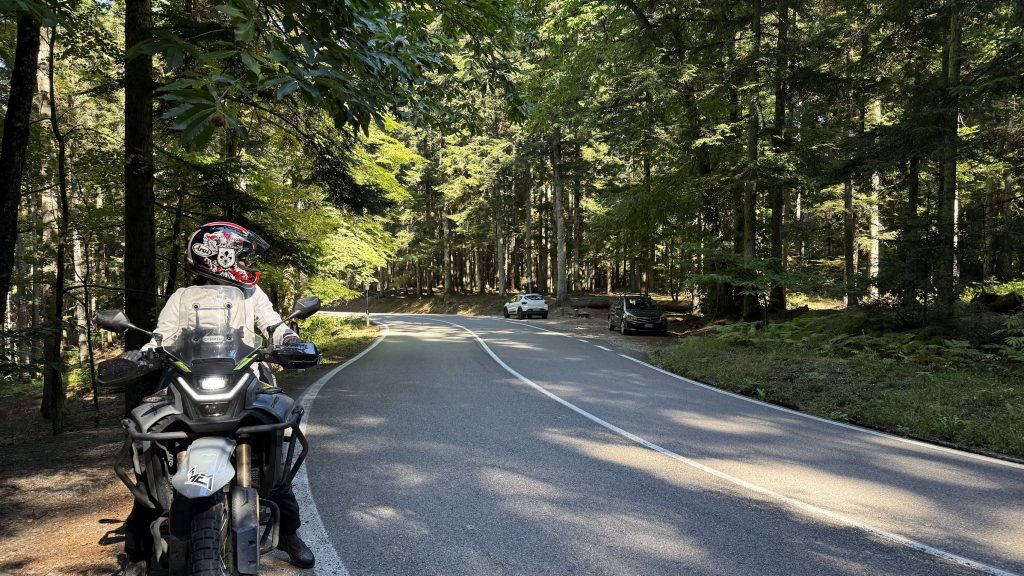
Tuscan forest.
Once past Loro, the road is still interesting — olive groves as far as the eye can see — but it’s nothing like the earlier stretch. The zen-like SP1 between Reggello and Loro will have you praising the Lord, whether you believe in one or not. More like a national park, as Min remarked.
We reached Arezzo around 2pm and, as is our custom, headed straight into the heart of the centro storico looking for a cafe.

We found one only a block away from the main pedestrian strip parking the bikes in plain view from our table. Our helmets off, we ordered fresh squeezed orange juice and watched a film crew setting up for some kind of a film or tv shoot.

Hard to explore on foot when all your belongings sit alone in soft luggage, something we realized much earlier on the trip, so we took turns wondering around before continuing on.
Although, technically, we’d remain in Tuscany until the next day, Arezzo seemed to lie in a region that’s distinctly different than what we saw around Florence. Whereas Florence still feels partially north in character, Arezzo struck us as more representative of central Italy. Warmer, a little less polished.

The road between Arezzo and Cortona is pleasant, but not particularly pretty. More olive groves, more little towns.

Ever seen a statue of a motorcyclist? Now you have. Fabrizio Meoni, winner of Paris-Dakar in 2001.
Things don’t get interesting until the last 10km or so when the SR71 first goes by Castelo di Montecchio Vesponi before a dramatic reveal of Cortona itself, perched high above the valley on the west facing slopes of Monte Alta di Sant’Egidio.
Tempting as it was to zigzag up into the old town, we delayed our gratification until later in the afternoon and headed for our argitourismo in the foothills below to rest. The place ended up being a little tricky to find and we had to scout out a good kilometer from where Google thought it was before finally arriving at our destination.
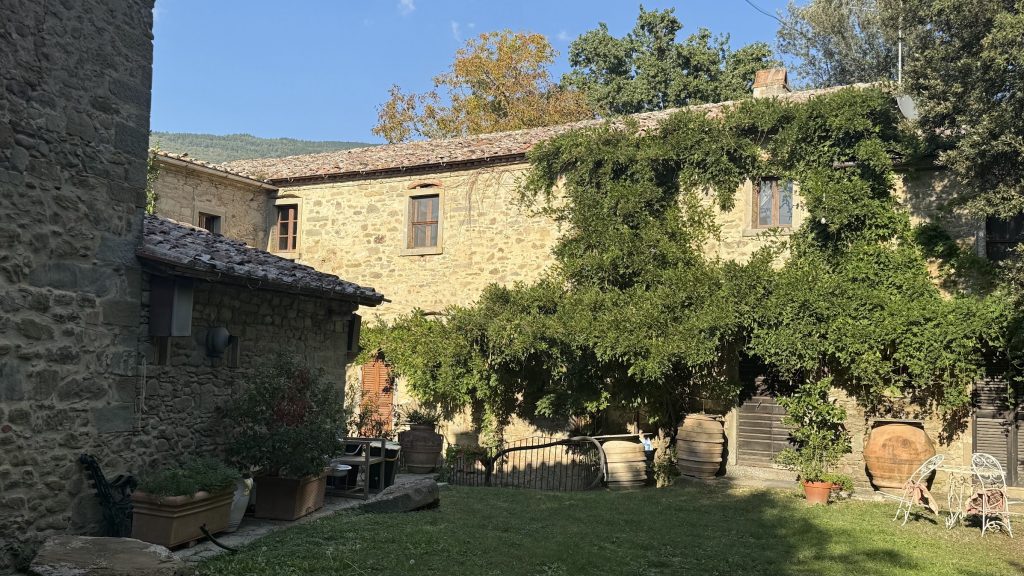
Frantoio Valiani, as the place was called, was very much worth the effort. The farm remembered the days of Leonardo da Vinci, according to the hostess, and still produced its own olive oil. In fact, the the presses were running full steam on the Saturday afternoon when we arrived. The accommodations were modest but clearly in use for several hundred years. The guests came from all over Europe.

At one point, we struck up a conversation with an Austrian man in his mid 60’s who was casting longing glances at our bikes as he packed up his minivan. It took a little prying to learn exactly why. Seven years earlier he had ridden across Morocco and Tunisia with a friend on a couple KTM450s. Never know when you’re going to run into an adventure rider.
Cortona is a very special little medieval town and one I’ve visited 33 years earlier. Back in the days before the internet when Let’s Go books were a thing, my mother came to visit me in Paris and we took a train to Italy. This was one of our destinations.
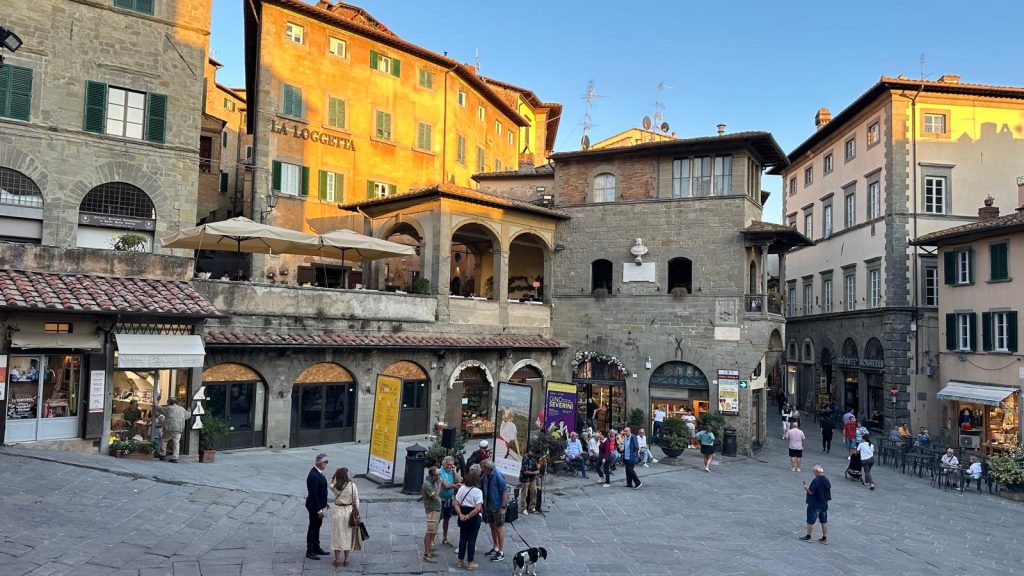
Back in those days the town seemed almost deserted. Few people on the streets, easy to find a table at dinner time.
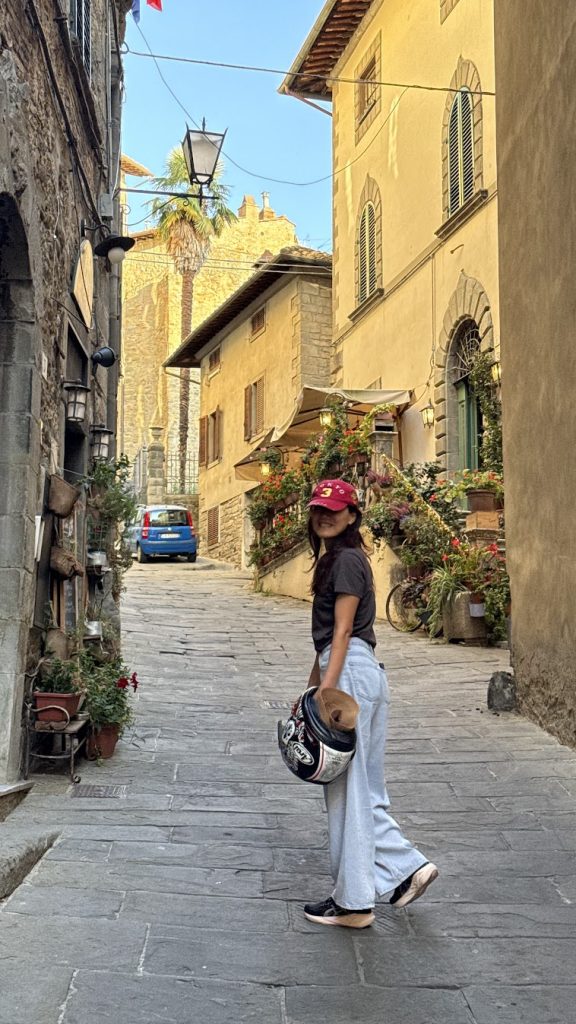
Cortona has undergone a major transformation since then.

When we strolled through the streets this time with Min it was very much alive.
There were posters for jazz and photography festivals, little boutique shops of every kind and a good turn out of tourists both from Italy and abroad.

I was hoping to treat Min to a meal in one of the Trattorias that made such an impression on me decades earlier, but they were all booked solid by the time they opened at 7pm.

Looking down from Cortona before sunset.
My guess is that Under the Tuscan Sun, a book and later a film, that came out about a decade after my first visit played a significant role here.