Our second day of travels across Montenegro took us from Ulcinj, a popular, but unremarkable beach town in the south to the Bay of Kotor, Europe’s southernmost fjord as it’s sometimes called, in the north of the country. Though technically not a fjord as it’s the result of tectonic activity rather than glacial carving, visually it fits the bill. Regardless of the designation, it made quite an impression. One we’re still digesting.
Here’s how it went, the second weekend in May.
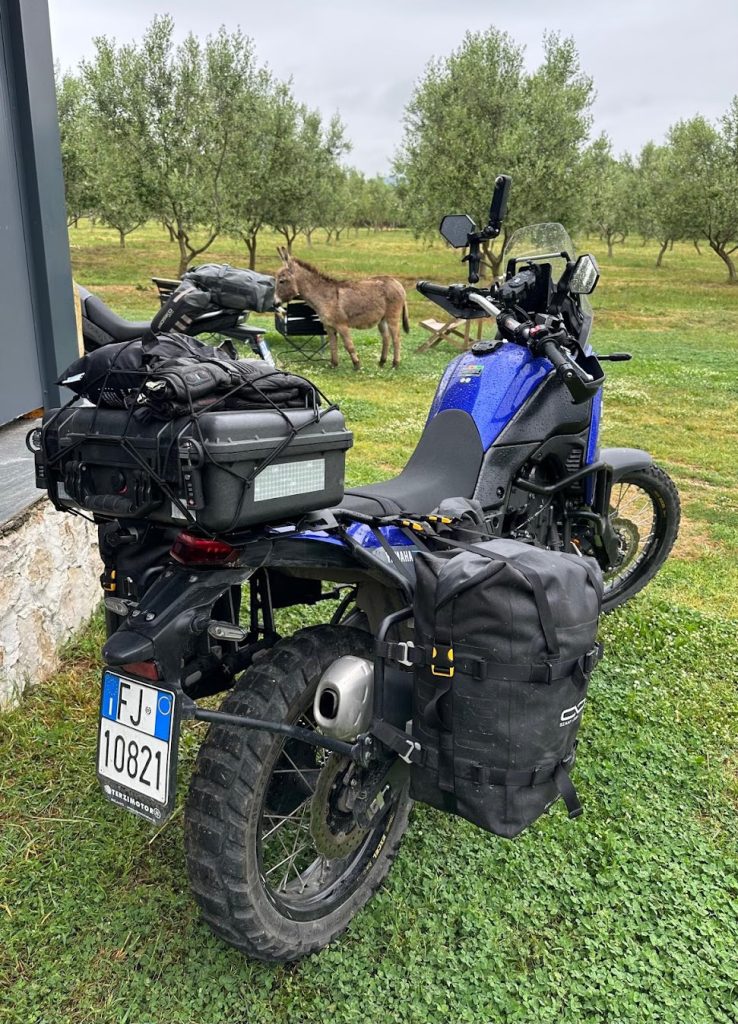
On the morning of our departure, We had a chat and coffee with our host, bid the donkeys a sad goodbye and set out with our compass pointing north.

About 90km in all, this was not going to be a hard riding day so we took off a good hour later than normal.
The plan was to take our time, explore the coast as much as its feasible when fully packed and arrive at our destination around 3pm.
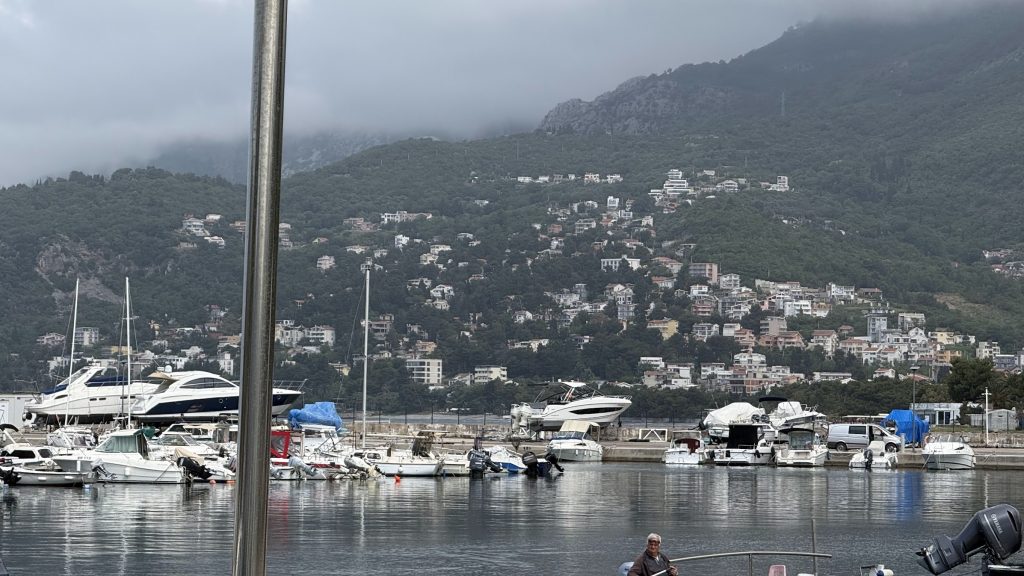
The first town of note was called Bar. Part beach town, part port city with connections to Italy, it’s pretty nicely set against the foothills above the Adriatic. Most of the city lies on flat lowlands just above the sea level. Wouldn’t go as far as to call it pretty, but it does appear livable.
From Bar to Sutomore and even Canj we rode past several fairly conventional beach towns. At least from what we could observe from the highway. None peaked our interest.
The towns that we did find more intriguing were Petrovac, Sveti Stefan and Budva further up the coast. We rode through the first two on this list a week earlier, but we didn’t have the time to explore. This time we swung down form the coastal highway for a closer look.
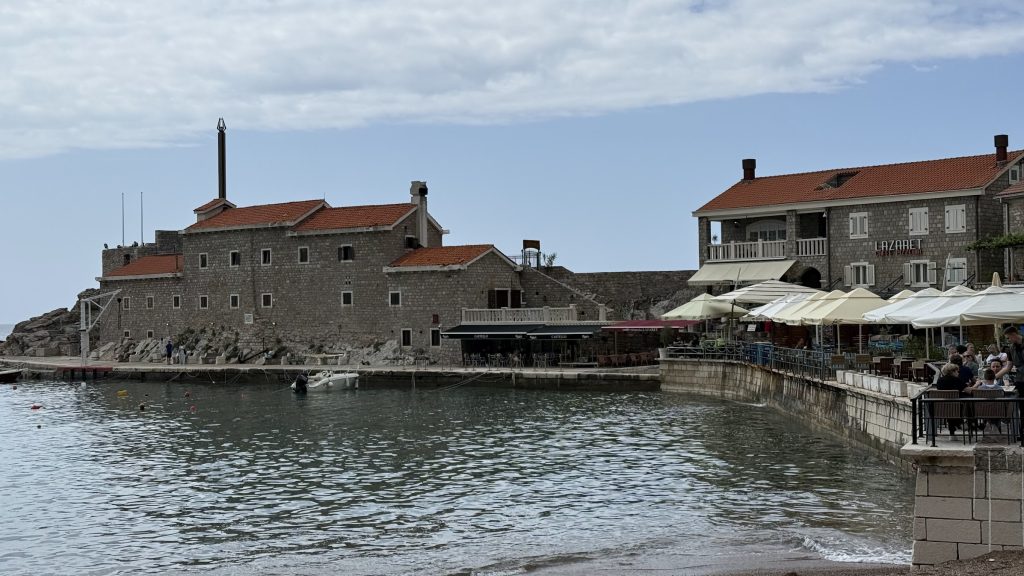
In Petrovac we found a perfect little enclave for those wanting to get away from the crowds. The town was built around a cove and down a steep hill. It feels both secluded and cozy. The old town is small, but sits right on the water and there’s even a small promenade and a beach. Probably my favorite along the way.

Sveti Stefan is a bit like a miniature version of Mont-Saint Michele on the Normandy coast of northern France. It’s a village-island-fortress linked to the mainland by a thin walkway. It is said that at one point the Venetians welcomed pirates pestering the Ottomans here.
We didn’t want to leave our soft luggage sitting alone for an hour so we didn’t explore in depth, but the site seemed to attract a fair number of tourists from the area.
Last came Budva. Based on my reading, the greater Budva area, population about 27k, is a destination for internal migration in Montenegro. The town did appear to be thriving when we drove through it. Definitely a beach town in the making, there were more signs of recent development here than in Ulcinj. The overall vibe seemed more hip and happening.
Soon after Budva the coastal road ends and the highway, now E80, turns straight north and inland. Here, too, there are many signs of an economic boom with the thoroughfare being actively widened and lots of stores, many selling building materials, lining either side. This feels more like the strip mall and franchise section one can now find outside of almost every American town and, increasingly, the more developed parts of Europe.
Our plan at this point was to circle the Lustica peninsula from the west and approach Kotor from the north, but we came across a pretty big traffic jam right outside of Tivat and gave up on the idea. Whatever the cause, the traffic was at a complete standstill so we just headed back and followed the first signs for Kotor. Once again, just like south of Vlore a couple weeks earlier, we ended up going through a long, tunnel shortly before arriving at our destination. Unventilated, the tunnel is probably about 4 min long, but I’m certain it takes a rider’s lungs 40 min to recover. The older, roundabout way which takes about 14 minutes would have been preferable.
None of these thoughts and calculations go through one’s head upon exiting the tunnel close to the Kotor town center on the other side of the mountains. Situated at sea-level at the very end of a fjord-like bay with the surrounding mountains rising to 1200-1500m, Kotor immediately comes across as a destination. And no wonder, it’s a UNESCO heritage site with both nature and culture meriting the designation. Our own first impression was pure awe. Over the following week the situation went from bad to worse. We ran out of words to describe what we were seeing.
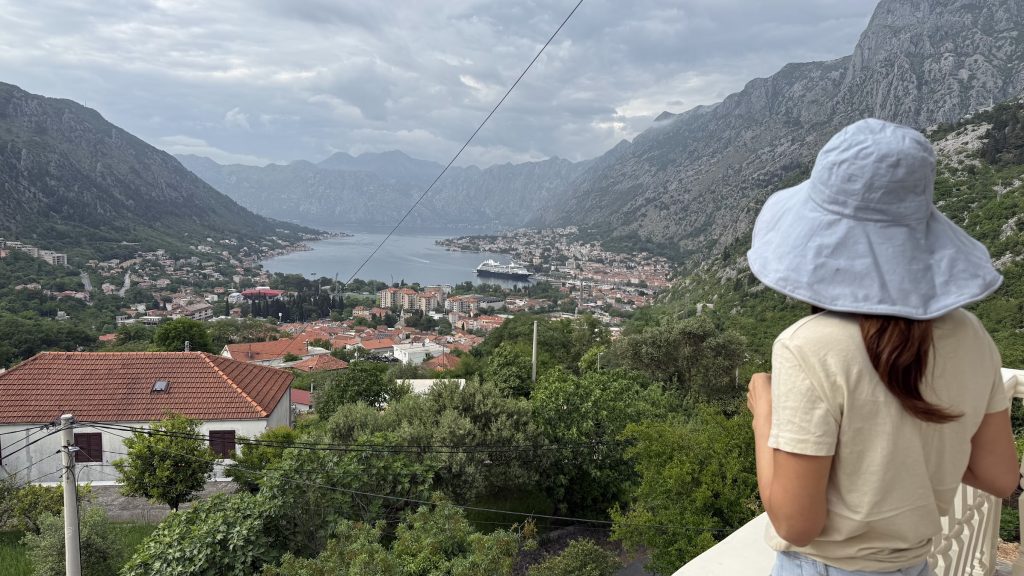
Much of that will come to light through my ride reports, but here’s what we saw from our balcony that afternoon.
And a few seconds from a ride to a grocery store recorded a couple days later.